
Form follows sound.
We build for those who understand that true high-end audio begins with the foundation.
HEAR is founded on the belief that true high-end sound begins long before the signal reaches the electronics.
Our company designs and manufactures high-end audio racks for those who seek uncompromising sound quality and refined aesthetics.
Rooted in a deep respect for music and analogue reproduction, our approach combines precision engineering, thoughtful design and a relentless pursuit of sonic excellence. Each product reflects a philosophy shaped by decades of listening, experience and craftsmanship.
About the Founder
Piotr is a humanist, philologist and designer, with years of experience as a manufacturer of equipment for the food industry, as well as a business owner and manager. By passion, a sailor, motorcyclist and guitarist for over 40 years – and above all, a devoted music lover and admirer of analogue sound.
The idea of designing and manufacturing high-end audio racks was born from this lifelong love of music – a passion that has accompanied him for over 60 years. A key inspiration came from his collaboration and friendship with Janusz and Robert Sikora of J. Sikora Turntables, creators of some of the world’s finest high-end turntables, one of which Piotr proudly owns.
“
Since childhood, I have felt that I HEAR more — or perhaps listen more carefully — than most.
That sensitivity has shaped not only my personal journey and choices, but also the philosophy
behind our products and our pursuit of the finest possible sound.
Piotr Balmas, Founder
About our Team
We are a team with over 30 years of experience in the design and construction of machinery for the food industry, alongside precision machining of a wide spectrum of materials.
This journey has allowed us to cultivate a deep and nuanced understanding of the physical, chemical, damping, and resonance characteristics of metals — ranging from carbon and stainless steels to non-ferrous materials and alloys such as aluminium, bronze and brass.
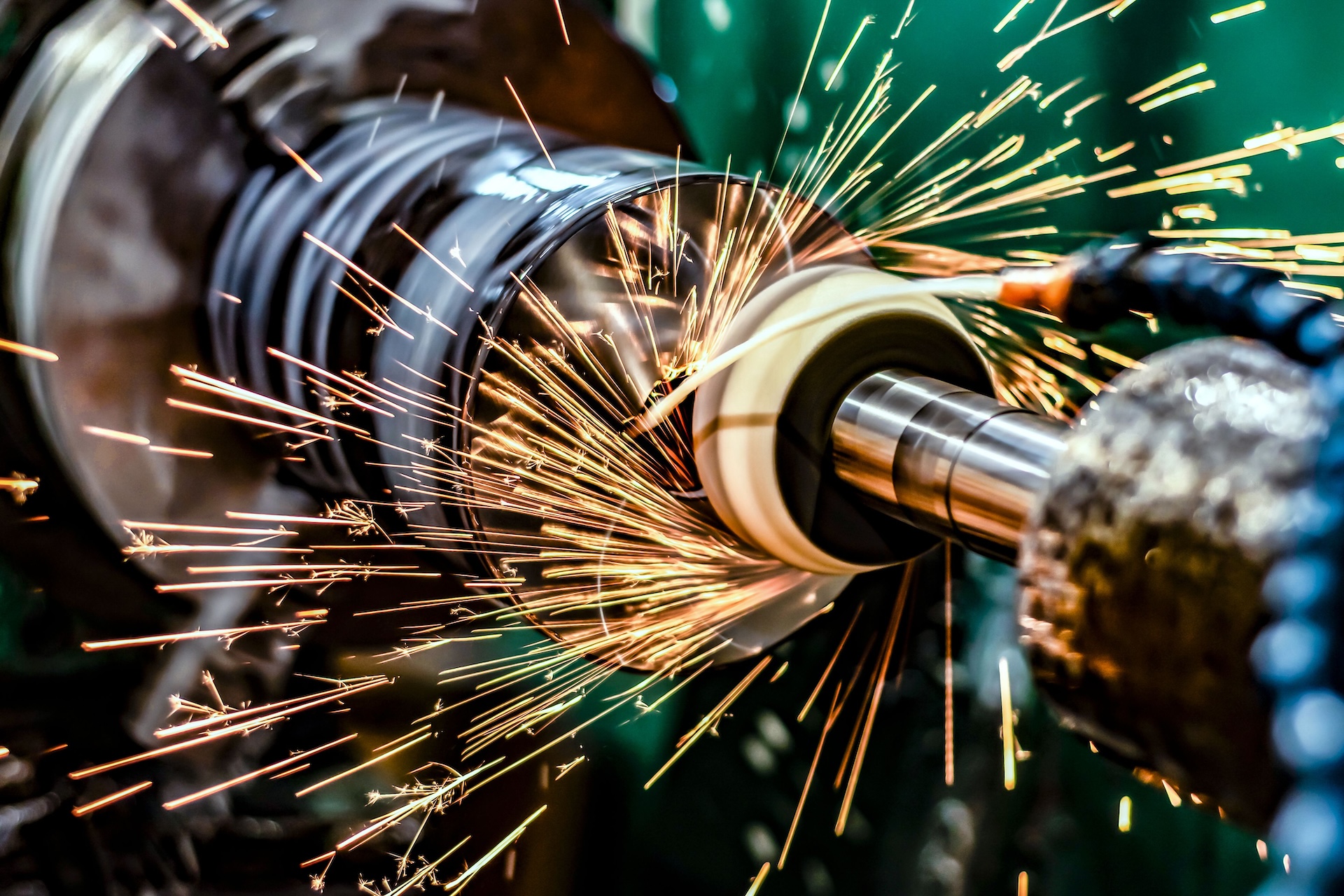
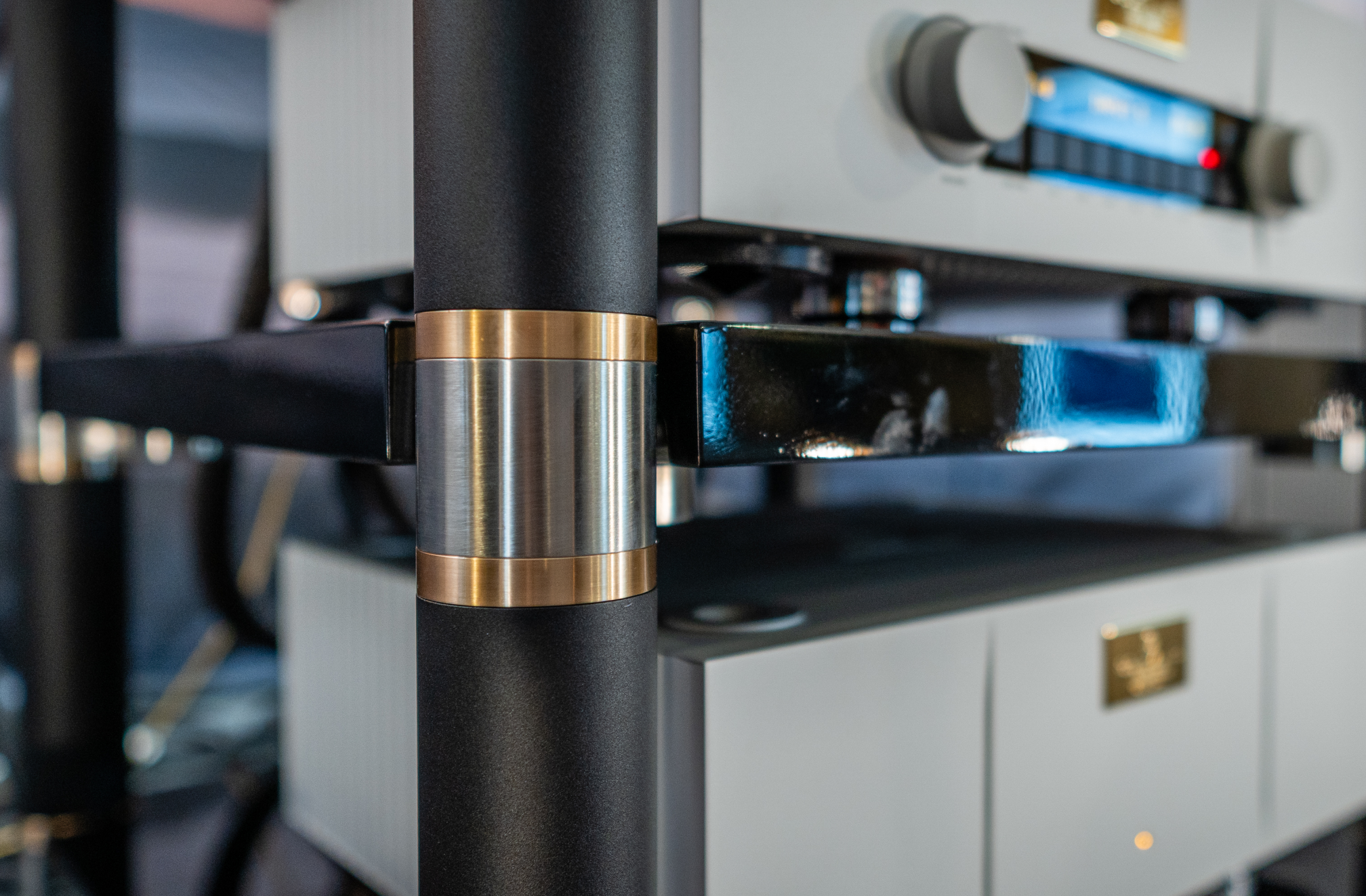
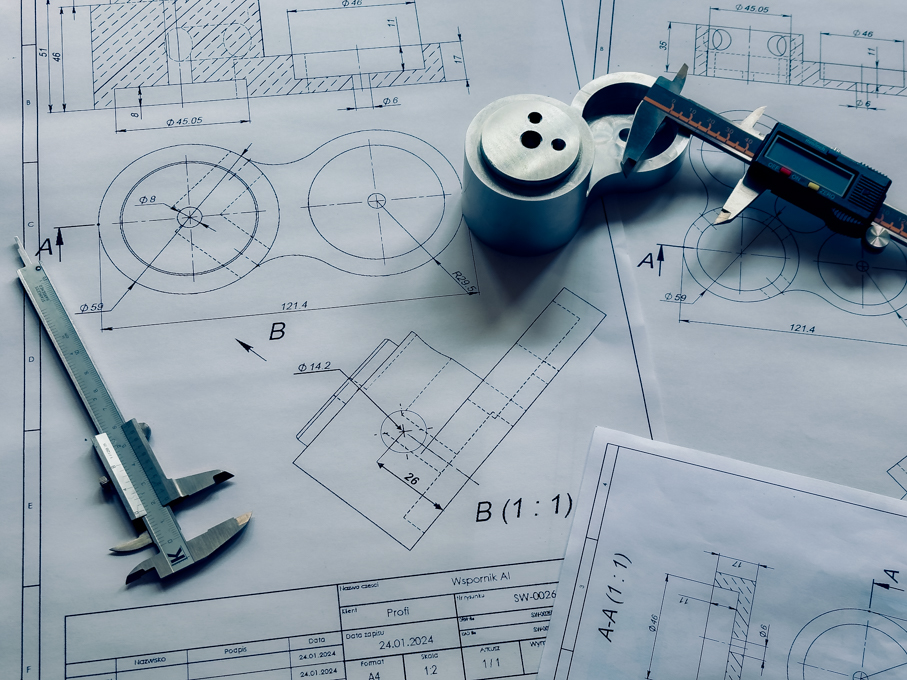
Over time, we felt compelled to transform this expertise into something closer to our passion for music. Drawing on our mastery of materials and precision engineering, we began creating high-end audio racks designed for the most demanding systems, where every detail matters, and where controlling vibration and resonance becomes essential to revealing the full emotional depth of sound.
Our company develops audio racks as mechanically optimized structures designed to control vibrational energy throughout the audio chain. Each platform, support point, and interface is defined by its mechanical function — isolation, decoupling, or controlled energy dissipation.
Material selection is based on stiffness, internal damping, and resonance behaviour, ensuring predictable and repeatable performance. By minimising parasitic vibrations and structural feedback, H.E.A.R. products reduce noise floor, improve signal stability, and preserve spatial and temporal accuracy.
The result is not a sound signature, but mechanical neutrality — allowing the system to reproduce music as intended.
Brand Philosophy
The philosophy of HEAR — High-End Audio Racks is defined by the belief that sound reproduction goes far beyond technology alone. For music to truly flourish, we combine engineering precision with refined form, creating solutions that are not only functional but also aesthetically coherent — designed for users who expect uncompromising quality.
Everything around us is living energy and vibrates — vibrations are everywhere. Even the music we love is vibration: air movements induced by musical instruments or the human voice reach our ears through vibrating loudspeaker diaphragms. However, this does not mean that all vibrations are desirable in the world of music — especially in high-end audio. Quite the opposite. In reality, a significant portion of mechanical vibrations are parasitic in nature and negatively affect sound reproduction.
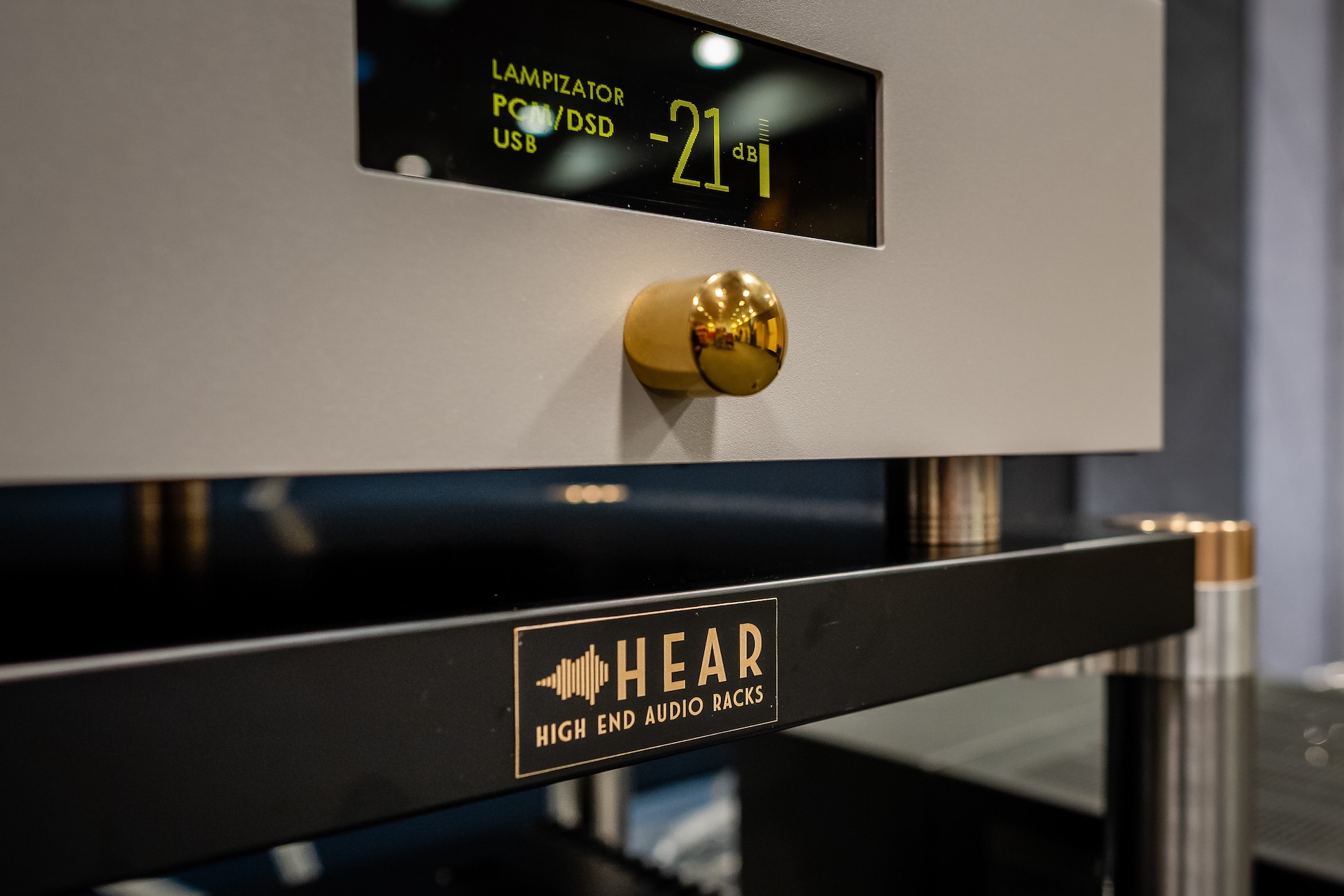
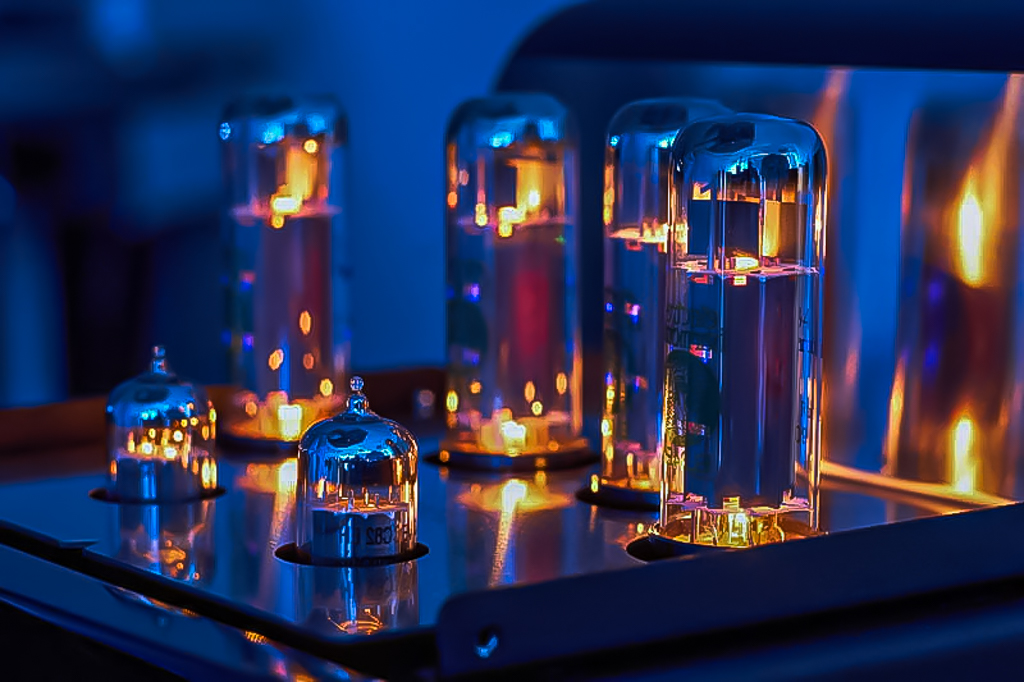
The process of sound reproduction begins long before the electro-acoustic stage. Its foundation lies in mechanical stability, resonance control, and the elimination of unwanted structural vibrations which — though invisible — remain clearly audible as signal degradation. A high-end audio system is a fusion of electronics and mechanics.
Every transformer generates its own vibrations. Every enclosure stores and releases mechanical energy. Every surface exhibits a specific resonant behaviour. If these phenomena are not controlled, they result in loss of micro-dynamics, reduced resolution, narrowed soundstage, and impaired spatial imaging.
We design our audio racks as precision mechanical systems, not pieces of interior furniture. Their purpose is to control the flow of vibrational energy through separation, decoupling, and dispersion — before it reaches the sensitive components of the audio signal path. We do not rely on excessive damping or mass as goals in themselves. Instead, we focus on optimal mass selection, high structural rigidity, and precisely defined mechanical decoupling.
Floating anti-vibration platforms isolate individual audio components, while their systematic separation minimizes mutual interference between transformers, power supplies, and signal paths.
Construction materials are selected based on their mechanical and acoustic properties — such as modulus of elasticity, internal damping coefficient, and resonance behaviour — not for aesthetic reasons or market trends.
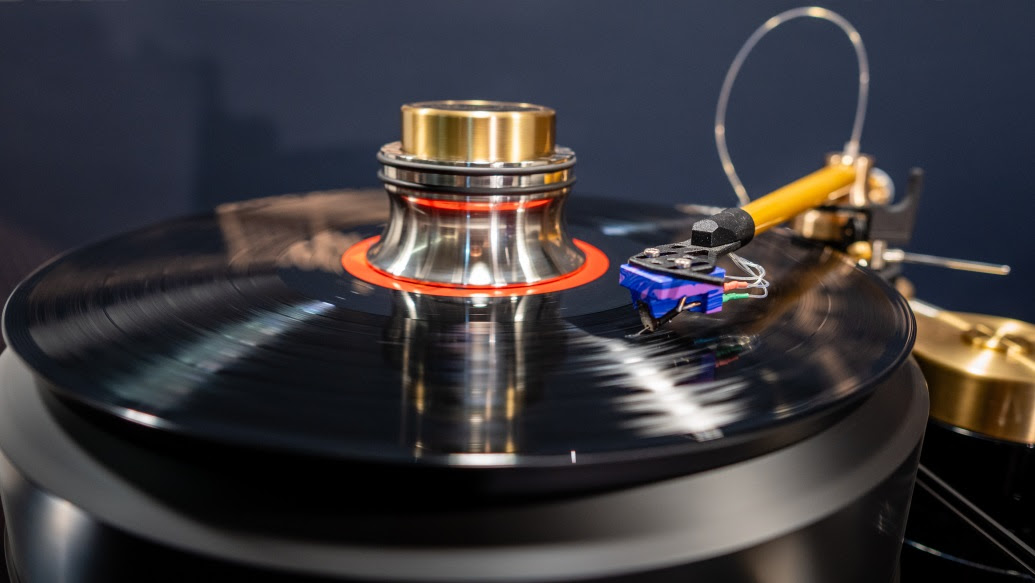
Mechanical energy should not be stored randomly. It must be guided, dispersed, and discharged in a controlled and predictable manner. That is why every contact point — platform, support, foot, or point-contact element — serves a clearly defined function within the mechanical structure of the system.
The result is not the addition of a sonic character, but its neutralization.
Reducing mechanical interference lowers the noise floor, improves musical clarity, and enhances rhythm, scale, and temporal coherence of the recording. We design foundations for systems with the highest demands. When mechanics are properly engineered, electronics can operate under optimal conditions and reveal their full potential…
…the rest is silence.